Body Scan Meditation: A 10-Minute Practice
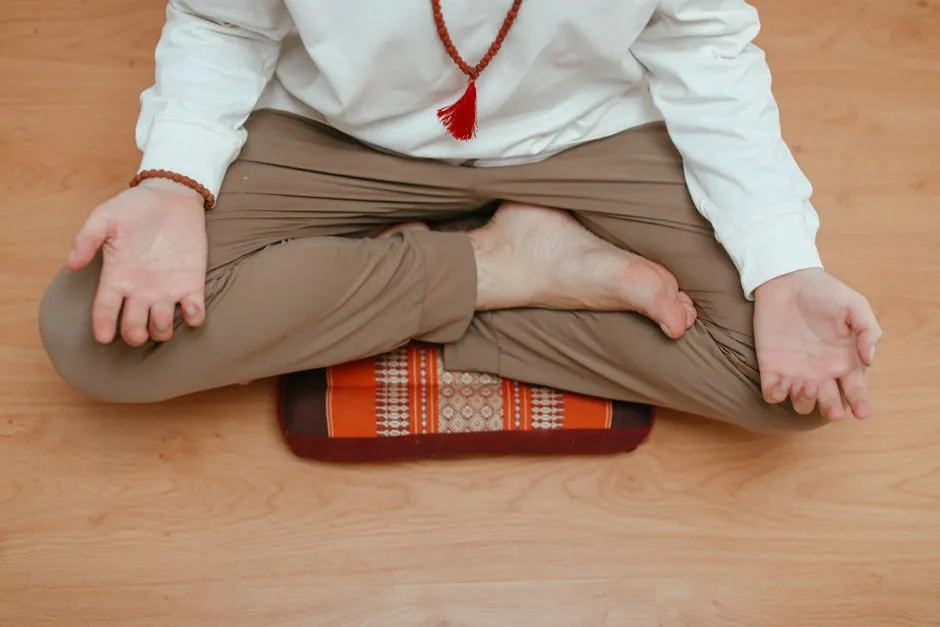
A body scan is noticing, not repairing
A body scan meditation moves attention gradually through physical sensations without trying to change them. Lie down or sit comfortably, notice where the body contacts the floor or chair, follow a few natural breaths, then move awareness from the feet through the legs, torso, hands, arms, shoulders, neck, and head. Spend several breaths with each region. When attention wanders, return to the place you last remember.
The goal is awareness, not guaranteed relaxation. You may notice warmth, pressure, pulsing, itch, pain, or nothing clear at all. All are valid. Your left ankle does not owe you a profound spiritual development before the timer rings.
This is educational practice guidance, not medical, psychological, or therapeutic advice. If focusing on the body intensifies distress, open your eyes, switch to an external anchor, or stop. If practice repeatedly brings up severe anxiety, dissociation, traumatic memories, or other difficulty, consider working with a qualified teacher or licensed clinician.
Set up the practice
Choose one of three positions:
- Lie on your back on a mat, bed, or firm sofa, with support under the head or knees if useful.
- Sit in a chair with feet supported, hands resting easily, and the back upright without being rigid.
- Lie on your side with cushions for support if being flat on your back is uncomfortable.
Warmth helps because a still body cools quickly. Use a light blanket if needed. Loosen tight clothing, silence nonessential notifications, and set a gentle timer for 10 minutes. Keep your eyes closed only if that feels comfortable; a soft gaze toward the floor is equally legitimate.
Let breathing remain natural. A body scan is different from box breathing: you are observing the breath and body, not holding to a counted pattern. If breath is not a comfortable anchor, use contact with the chair, ambient sound, or the weight of the hands instead.
You do not need silence. Sounds can come and go in the wider field while attention rests on the body. The practice is not ruined because a neighbour owns a blender.
A 10-minute body scan script
Read the sequence first, record it in your own voice with pauses, or move through it from memory. The times are approximate. Nothing breaks if your feet receive 90 seconds and your shoulders negotiate for more.
Minute 0 to 1: arrive
Notice the points of contact beneath you: heels, legs, hips, back, hands, or feet on the floor. Feel weight and support. Let the jaw loosen if it wants to. Take three ordinary breaths and notice one location where breathing is easy to feel.
Do not try to produce a special state. You are here, the body is here, and that is enough material for minute one.
Minute 1 to 2: feet
Bring attention to the toes of the left foot, then the sole, top, heel, and ankle. Notice temperature, fabric, pressure, tingling, or the absence of distinct sensation. See if you can feel the foot as a whole.
Move to the right foot and repeat. If attention wanders, name it lightly - "thinking" or "planning" - and return without reviewing the plot.
Minute 2 to 3: lower legs and knees
Move through the left calf, shin, and knee, then the right. Notice areas of contact and areas suspended away from the surface. If there is discomfort, observe its qualities only if doing so feels manageable: tight, hot, dull, moving, steady. You do not need to stare it down.
If sensation becomes overwhelming, widen attention to both legs, the whole body, or sounds in the room. You are allowed to move, adjust, or stop.
Minute 3 to 4: thighs, hips, and pelvis
Feel the weight of both thighs and the contact around the hips and pelvis. Notice whether one side feels heavier, warmer, tenser, or simply easier to sense. Include the lower back as part of this region.
Let sensations be unequal. Symmetry is not required for awareness.
Minute 4 to 5: belly and lower back
Bring attention to the abdomen. Notice movement with breathing without deepening it. Feel expansion, release, clothing, temperature, and the support beneath the lower back.
If the belly is emotionally uncomfortable as a focus, return to the hands or feet. Meditation does not improve through coercion.
Minute 5 to 6: chest and upper back
Notice the ribs moving, the sternum, the upper back, and the rhythm beneath them. You may feel heartbeat, breath, tension, or very little. Let the field be broad rather than trying to locate each internal event precisely.
There is no need to change the breath. If it changes on its own because you are watching, notice that too.
Minute 6 to 7: hands and arms
Move to the fingers of the left hand, palm, back of the hand, wrist, forearm, elbow, and upper arm. Then scan the right side. Feel both arms together.
Hands often provide vivid sensation and make a useful safe anchor. Return here whenever another region feels too intense.
Minute 7 to 8: shoulders and neck
Notice the shoulders from inside: weight, tightness, warmth, clothing, or contact. Let attention move through the neck and throat without trying to force either to relax.
You can invite softening, but do not grade the response. Sometimes a shoulder remains a shoulder-shaped paperweight. Awareness still counts.
Minute 8 to 9: face and head
Scan the jaw, lips, cheeks, nose, eyes, forehead, ears, scalp, and the back of the head. Notice tiny areas of tension and areas that feel neutral. Let the tongue rest naturally.
If the face feels busy, widen attention to the outline of the whole head rather than inspecting every muscle.
Minute 9 to 10: whole body
Expand attention to the body as one field, from feet to head. Feel breathing happening within that larger shape. Include contact, sound, temperature, and space around you.
When the timer sounds, take a fuller breath if comfortable. Wiggle fingers and toes, open the eyes or lift the gaze, and change position slowly. Notice the transition rather than catapulting directly into email.
What to do when you feel nothing
"Nothing" is common. Some regions are simply less vivid, and attention becomes more precise with repetition. Try noticing indirect information:
- the pressure of clothing;
- contact with the floor or chair;
- temperature compared with a neighbouring region;
- the outline or position of the body part;
- subtle movement caused by breathing;
- the fact that the region feels blank or distant.
Do not rub, tense, or imagine sensation just to complete the assignment. Knowing that the left elbow is currently unremarkable is a perfectly respectable piece of information.
If numbness is new, medically concerning, or accompanied by weakness or other symptoms, meditation is not an assessment tool. Seek appropriate medical advice.
Working with discomfort safely
Body scans are sometimes presented as a way to sit heroically with pain. That is not required. You have choices:
- Narrow: notice one manageable edge or quality rather than the whole discomfort.
- Widen: include surrounding neutral areas, the full body, or room sounds.
- Move: adjust position slowly and observe the movement.
- Switch: place attention on hands, feet, vision, or an external sound.
- Stop: end the practice and do something grounding.
The NHS MBSR exercise page explicitly says to stop an exercise that is painful or uncomfortable and discuss it with a doctor or trainer. The VA also suggests returning to the breath or opening the eyes if sensations or feelings become too intense. Those are sensible permissions for any self-guided practice.
For grounding, sit up, name several things you can see, feel both feet, and look around the room. If internal attention repeatedly increases distress, do not keep testing it alone. A clinician familiar with your situation or a well-trained teacher can help adapt the practice.
Body scan versus relaxation exercise
Relaxation often happens during a body scan, especially while lying down. It is still not the task. The task is to know what is present with a little less automatic resistance or commentary.
If you chase relaxation, normal tension can feel like failure. If you practise awareness, tension becomes part of the session. This distinction makes the method more honest and often less frustrating.
Falling asleep is also common. If sleep is welcome, fine. If you want awake practice, sit up, keep the eyes partly open, practise earlier, or shorten the scan. A body scan can precede bedtime, but it need not become a nightly contest against consciousness.
Make it a repeatable practice
Start with 10 minutes two or three times a week. Use the same route through the body until it becomes familiar, then experiment with shorter three-minute scans or longer guided versions. The VA notes that body scans can range from a few minutes to much longer sessions; the useful length is the one you can practise safely and consistently.
On rushed days, scan five broad regions: contact points, legs, torso, arms, and head, then the whole body. On scattered days, use a recording. On sleepy days, sit.
The broader beginner meditation guide explains posture, timers, wandering, and habit-building. Browse all meditation basics when you want another anchor. One practice is not inherently superior; it is simply another doorway into paying attention.
A note on care
Lotus & Breath offers educational guidance, not medical, psychological, or therapeutic advice. If practice intensifies distress, ease off and consider working with a qualified teacher or licensed clinician. If you are in a mental-health crisis, contact a licensed professional or a crisis line; in the United States, call or text 988. Do not rely on self-guided meditation during a crisis.
The body scan asks one modest question: what is here right now? You do not have to like the answer, fix it, or turn it into wisdom. Notice, move on, and let the knees remain pleasantly unremarkable for once.