How to Meditate for Beginners: A Simple 5-Step Routine
How to Meditate for Beginners: The Short Answer
To meditate as a beginner, sit comfortably with your back upright, set a timer for 5 minutes, close your eyes, and rest your attention on the feeling of your breath. When your mind wanders — and it will, constantly — notice the wandering and gently return to the breath. That return is the practice. Repeat daily, and lengthen the timer only when 5 minutes feels easy.
That's the whole method. Everything below just makes each step concrete enough to do tonight, at home, with no equipment.
What Meditation Actually Is (and Isn't)
Meditation is attention training: you pick one anchor — usually the breath — and practice noticing when your attention has drifted away from it, then bringing it back. It is not about emptying your mind, stopping thoughts, or feeling blissful. A session where you drift off fifty times and come back fifty times is a successful session.
Two beginner myths worth clearing up front:
- "I can't meditate because I can't stop thinking." Nobody can stop thinking. Noticing that you're thinking is the skill you're building.
- "I'm doing it wrong if I don't feel calm." Calm is a common side effect, not the goal. Some sits feel restless. They still count.
The 5-Step Beginner Routine
Step 1: Pick a time and place
Choose one consistent time — right after waking and right after brushing your teeth at night are popular because they attach to an existing habit. Any reasonably quiet spot works: a chair, the edge of your bed, a cushion on the floor. You don't need silence, incense, or an app. You need a spot where you won't be interrupted for a few minutes.
Step 2: Sit so you're comfortable but alert
Posture matters less than beginners fear. The formula is stable, upright, relaxed:
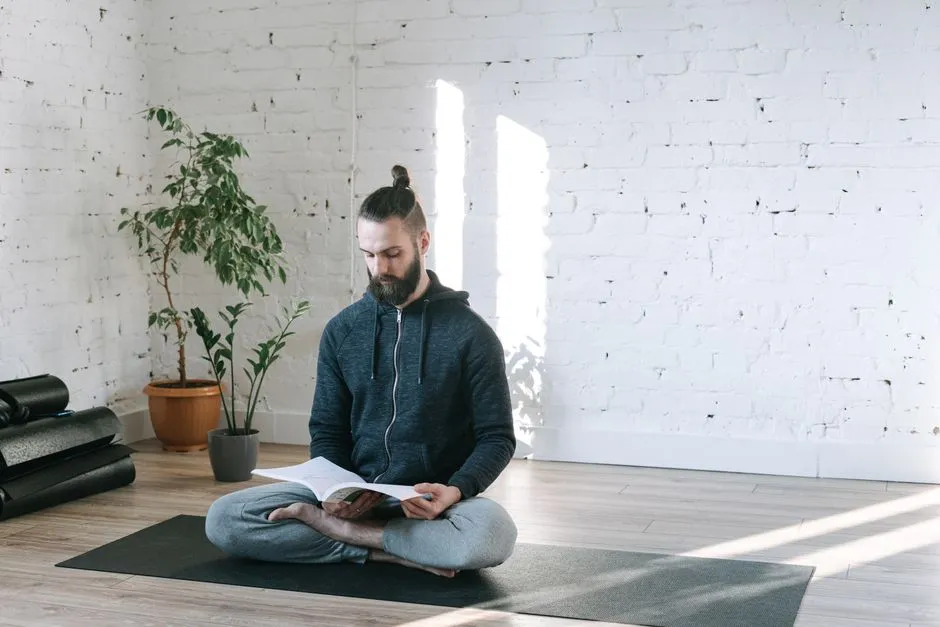
- Sit on a chair with feet flat on the floor, or cross-legged on a cushion.
- Let your spine be tall but not rigid — imagine a string lifting the crown of your head.
- Rest your hands on your thighs or in your lap.
- Close your eyes, or soften your gaze toward the floor a few feet ahead.
If something hurts, adjust. Pain is a distraction, not a merit badge.
Step 3: Set a timer for 5 minutes
Use your phone's timer with a gentle alarm sound, then put the phone face down. A timer removes the "how long has it been?" question so you can actually let go of the clock.
Step 4: Rest attention on the breath
Breathe normally — don't control or deepen the breath. Just find where you feel it most clearly: the air at the nostrils, the chest rising, or the belly expanding. Park your attention there.
If bare attention feels too slippery, count breaths: one on the exhale, up to ten, then start over. Losing count is normal; just begin again at one.
Step 5: Notice wandering, return gently
Within seconds, your mind will jump to dinner, an email, an old argument. The moment you notice you've wandered, you've already succeeded — that noticing is a rep, like a bicep curl for attention. Return to the breath without scolding yourself and continue until the timer sounds.
How Long Should a Beginner Meditate?
Start with 5 minutes a day. Consistency beats duration: five minutes daily builds the habit and the skill far better than thirty minutes once a week. A realistic progression looks like this:
| Phase | Daily length | Focus |
|---|---|---|
| Weeks 1–2 | 5 minutes | Just show up every day |
| Weeks 3–4 | 10 minutes | Same routine, longer timer |
| Month 2+ | 10–20 minutes | Settle into what's sustainable |
Only lengthen your sits when the current length feels genuinely easy. There's no prize for rushing to 20 minutes — a five-minute practice you actually keep is worth more than an ambitious one you abandon.
Common Beginner Problems (and Honest Fixes)
- Restlessness: Shorten the session rather than quitting. Even 3 minutes maintains the habit.
- Sleepiness: Sit rather than lie down, open your eyes slightly, or practice earlier in the day.
- Itches and fidgets: Try noticing the urge for a few breaths before moving. If you need to move, move deliberately, then resettle.
- Boredom: Boredom is just the mind protesting the lack of stimulation. Treat it as one more thing to notice.
- "Is this even working?" Progress shows up outside the sit — catching yourself mid-spiral during the day, a beat of patience before reacting. Give it a few weeks before judging.
Want More Structure? Try Counted Breathing
Some beginners find open breath awareness too loose and do better with a counted pattern that gives the mind a clear job. Box breathing — inhale 4, hold 4, exhale 4, hold 4 — is a good companion practice: it takes two minutes to learn and works anywhere, from your desk to a parking lot. Our breathwork guides cover it and other structured techniques step by step.
Counted breathing isn't a replacement for sitting practice, but it's a useful on-ramp — and a practical tool for moments when a full sit isn't possible.
A Note on Care
Meditation is a practice, not a treatment. It can support everyday steadiness, but it isn't a substitute for professional care. If practice ever intensifies anxiety or distress, ease off and consider working with a qualified teacher or clinician — and if you're in crisis, reach out to a licensed professional or a crisis line (call or text 988 in the US).
Tonight's assignment is simple: one chair, one timer, five minutes, one breath at a time.